
PayShap for Online Casinos in South Africa: Instant Payments via ShapID and Bank Accounts
PayShap has become an important part of South Africa’s move towards faster domestic bank payments. The service allows money to move between participating South African banks in near real time, using either conventional bank account details or an easier-to-use ShapID linked to a mobile number. For gambling payments, this creates a potentially convenient route between a player’s bank account and a supported operator without relying on a card. There is, however, an essential legal distinction to understand in 2026: casino-style interactive gambling remains prohibited in South Africa, while online betting may be offered by bookmakers licensed by a provincial gambling authority. PayShap should therefore be used for gambling only where the operator is legally authorised in South Africa and specifically supports the payment method.
How PayShap Works for Gambling Payments in South Africa
PayShap is South Africa’s rapid bank-payment service, created through the country’s Rapid Payments Programme and launched commercially in March 2023. Instead of waiting for a conventional interbank transfer to clear, customers of participating banks can send money electronically with the payment generally reaching the recipient within seconds or minutes. The service operates between South African bank accounts and is intended for domestic payments rather than international transfers. This makes PayShap fundamentally different from an e-wallet or prepaid casino payment method: the money moves directly between bank accounts through the domestic banking system.
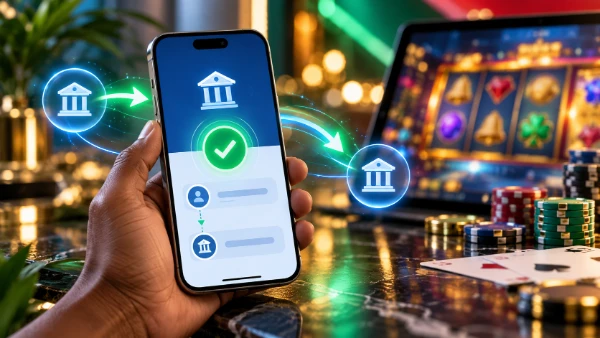
For a gambling customer, PayShap can be relevant when a locally licensed betting operator or its payment processor provides it as a deposit or payment option. The exact checkout process depends on the operator. In a merchant payment flow, a customer may select PayShap, provide the required mobile or banking information and then approve the transaction through their bank. Some implementations use a PayShap Request, where the bank customer receives a request and authorises the payment in their banking app. The operator can then receive confirmation of the completed bank payment without requiring the customer to enter card information.
PayShap should not be treated as proof that a gambling site is legal. Payment availability and gambling authorisation are separate matters. The South African National Gambling Board states that online casino-style interactive games remain unlawful, while online betting is permitted when supplied by a bookmaker licensed in South Africa. Players should therefore check the operator’s provincial licence details before sending money. In 2026, the National Gambling Board also maintains a verified-operator service based on information supplied by provincial licensing authorities, giving consumers an additional way to check local licensing status.
ShapID and Direct Bank-Account Payments Explained
A ShapID is an identifier connected to a South African bank account. For personal customers, it is commonly based on the mobile number registered with the bank. A bank-specific ShapID can appear in a format such as 0812345678@bankname, while a primary ShapID can allow payments to be routed using the registered mobile number without the sender having to specify the bank. The purpose is simple: a recipient can receive money without giving the payer a full bank account number every time.
Registering a ShapID is useful for receiving PayShap payments, but it is not always necessary for sending one. Several participating banks allow customers to make PayShap transfers directly to a recipient’s bank account number. FNB and Nedbank, for example, state that account-to-account PayShap payments can be made without the recipient having to use a registered ShapID. This means the service supports two practical payment routes: payments based on an easier identifier and traditional account-number payments processed through the faster PayShap system.
For gambling transactions, the distinction matters because an operator may implement PayShap differently from a person-to-person transfer. A betting site could use a merchant payment flow instead of asking a customer to manually transfer funds to a ShapID. When PayShap Request is integrated at checkout, the customer may receive an authorisation request from the bank and approve the amount there. Players should follow the payment instructions shown by the licensed operator rather than independently sending money to a mobile number or account that has not been verified.
PayShap Deposits, Withdrawals, Limits and Processing Times
A PayShap deposit can be fast because the underlying payment is processed in real time or near real time between participating banks. After approval, the receiving bank can obtain the funds within seconds, although the time at which a betting balance is updated also depends on the operator and its payment processor. An instant bank transfer therefore does not guarantee that every gambling account will be credited at exactly the same moment. Routine security checks, payment matching and account verification can still affect when the balance becomes available.
PayShap should also not be described as having one universal player limit. The industry-level transaction ceiling was increased from R3,000 to R50,000 in October 2024, but individual banks remain responsible for the limits available through their own services and customer profiles. Nedbank, for example, allows customers to increase a PayShap limit to as much as R50,000 through its app, subject to their payment limit. Standard Bank currently states a R3,000 maximum for a single PayShap payment on its consumer service, while Absa lists limits of up to R3,000 through its Banking App and Online Banking and up to R2,000 through Cellphone Banking. Limits can therefore differ substantially even when both banks participate in the same payment system.
Operator limits can introduce another layer. A licensed betting site may set its own minimum deposit, maximum deposit or withdrawal rules independently of the limits imposed by the customer’s bank. A payment could therefore fall within the bank’s PayShap allowance but still exceed the operator’s permitted transaction amount. The safest approach is to check both sets of limits before approving the transfer. Customers should also look at the amount displayed inside their banking service because the bank’s current personalised limit is more relevant than a general figure quoted in an older payment guide.
Can PayShap Be Used for Withdrawals?
PayShap can technically support incoming payments to an eligible bank account, so it can also be used in merchant payout arrangements where the operator and its payment provider support such transfers. Receiving money can be based on an account number or, in supported circumstances, a ShapID. This does not mean every bookmaker that accepts a PayShap deposit will automatically provide PayShap withdrawals. Deposit and payout systems are often configured separately, and a gambling operator may return withdrawals through another verified bank-transfer method.
A gambling withdrawal is also subject to more than payment speed. A locally licensed operator may need to complete identity and account checks before releasing funds, particularly where customer information or banking details have changed. Once the payout has actually been submitted through a real-time payment route, the banking stage can be quick, but verification before that point may take longer. Players should therefore distinguish between withdrawal approval time and the later movement of money through the banking system.
Using the same verified bank account for deposits and withdrawals can reduce avoidable payment problems. Gambling businesses commonly need to establish that money is being returned to the correct customer rather than redirected to an unrelated third party. If a player changes the bank account linked to a gambling profile, additional evidence may be requested before a withdrawal is processed. PayShap speeds up the transfer itself; it does not remove identity, anti-fraud or account-ownership controls applied by banks and licensed betting businesses.
PayShap Safety, Costs and Legal Checks Before Making a Payment
PayShap payments require careful confirmation because completed transfers are designed to settle rapidly and may be final. Banks normally show recipient information before the customer approves a transfer, helping the payer check that the intended recipient has been selected. Customers should read this information rather than relying solely on a mobile number copied from a message. If the recipient name, merchant information or requested amount does not match the expected gambling transaction, the payment should not be approved until the details have been checked through the operator’s official site or customer service channel.
Fees are determined by banks and can vary by account type, amount and transaction channel. There is therefore no single PayShap fee that applies to every South African customer. The customer’s banking service should display the applicable charge before confirmation where a fee is payable. The betting operator may also have its own payment rules, although customers should distinguish an operator charge from a bank transaction fee. Checking the final amount before authentication prevents confusion about the amount debited and the amount credited to the betting account.
PayShap is a domestic service. Participating South African banks are required on both sides of an ordinary PayShap transfer, and services such as Nedbank and Absa explicitly state that PayShap is not intended for cross-border payments. This point is particularly relevant to gambling because many offshore casino sites target South African visitors despite not holding a South African provincial gambling licence. The existence of a South African payment option, rand pricing or local-looking branding does not by itself make an offshore gambling business lawful.
Using PayShap Responsibly with a Licensed South African Operator
Before making a gambling payment, customers should first establish what type of gambling the business is authorised to provide. Under the position maintained by the National Gambling Board in 2026, casino-style interactive gambling over the internet remains prohibited in South Africa. Online betting is different: bookmakers may offer remote betting when properly licensed by a provincial gambling authority. A legitimate operator should make its South African licensing information available to customers, and those details can be compared with records supplied through the National Gambling Board and the relevant provincial regulator.
The second check is the actual payment instruction. A player should initiate PayShap only through the operator’s recognised cashier or payment section and confirm the recipient before authorisation. Requests arriving unexpectedly by SMS, messaging apps, email or social media should be treated cautiously, especially when they ask for payment to a private individual rather than the expected business. Since fast bank payments can be difficult to recover after confirmation, checking the recipient before pressing the final approval button is more effective than trying to resolve an incorrect transfer afterwards.
Used with a supported and legally licensed betting operator, PayShap offers a straightforward connection between a South African bank account and a real-time domestic payment service. Its main practical advantages are rapid processing, the option to use ShapID rather than repeatedly sharing full account details, and direct bank-to-bank settlement. Its limitations are equally important: bank limits differ, merchant support is not universal, international payments are outside its scope, and PayShap does not change South African gambling law. In 2026, the correct approach is therefore to verify the operator first, check the available PayShap method and bank limit, review the recipient and amount, and only then authorise the transaction.