

PromptPay in Online Casinos: How QR Payments and Instant Transfers Work
PromptPay has become one of the most widely used payment solutions in Thailand, and its integration into online casino transactions reflects a broader shift towards instant, mobile-first finance. Based on real banking infrastructure rather than intermediaries, this system allows players to transfer funds using QR codes or linked identifiers such as phone numbers. For users, the appeal lies in speed, transparency, and reduced dependency on traditional card processing. Understanding how PromptPay works in the context of online casinos helps clarify both its advantages and practical limitations in 2026.
How PromptPay Works in Online Casino Payments
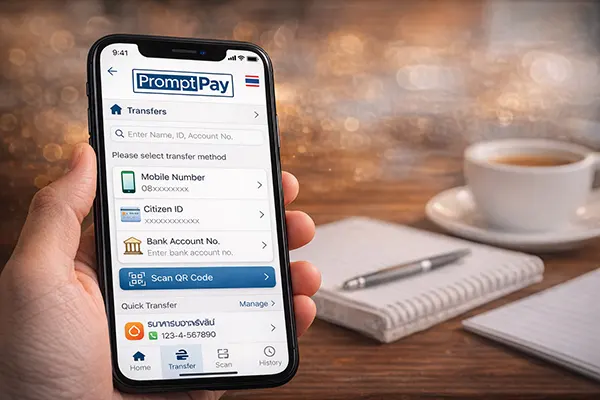
PromptPay is built on Thailand’s national e-payment infrastructure, regulated by the Bank of Thailand. It links a user’s bank account to a unique identifier, typically a mobile number or national ID. When used in online casinos, deposits are initiated by scanning a QR code generated at checkout, which contains transaction details such as amount and recipient account.
Once the QR code is scanned through a banking app, the player confirms the payment directly within their bank’s secure environment. Unlike card payments or e-wallets, there is no need to enter card numbers or create additional accounts. The transaction is processed in real time, and funds are transferred almost instantly to the casino’s merchant account.
This mechanism reduces friction during deposits. In practice, most PromptPay transactions are completed within seconds, and the casino system automatically credits the player’s balance after confirmation. This real-time processing is a key factor behind its growing adoption in Southeast Asian gambling markets.
Role of QR Codes in Secure Transactions
QR codes act as a bridge between the casino interface and the banking system. Each code is dynamically generated for a specific transaction, which means it includes exact payment details and cannot be reused for another deposit. This reduces the risk of manual errors and prevents incorrect transfers.
Security is reinforced by the fact that the payment is authorised within the user’s own banking application. Authentication methods such as biometric verification, PIN codes, or two-factor authentication remain under the bank’s control, not the casino’s. This separation limits exposure of sensitive financial data.
From a technical perspective, QR-based payments also simplify integration for operators. Instead of handling card data or complying with complex storage requirements, casinos rely on the banking infrastructure. This reduces operational risks while maintaining compliance with financial regulations.
Instant Transfers and Withdrawal Mechanisms
While PromptPay is most commonly associated with deposits, it also supports withdrawals in certain casino environments. The process differs slightly, as the player must provide their registered PromptPay identifier, usually a phone number linked to their bank account.
Once a withdrawal request is approved by the casino, funds are transferred directly to the player’s bank account via the same instant payment network. In many cases, this eliminates delays associated with traditional banking methods, where processing can take several business days.
However, availability of instant withdrawals depends on the casino’s payment infrastructure and compliance policies. Not all operators support automated payouts via PromptPay, and some may still rely on manual processing or alternative methods for larger sums.
Processing Times and Limitations
In standard conditions, PromptPay transfers are completed within seconds, regardless of the time of day. This 24/7 availability is one of its main advantages over conventional bank transfers, which may be restricted by banking hours or clearing cycles.
That said, there are transaction limits set by participating banks and regulators. These limits can vary depending on the user’s account type, verification level, and bank policies. For casino users, this means that high-value transactions may need to be split into smaller amounts.
Another factor is currency compatibility. PromptPay operates in Thai baht, so players using other currencies may encounter conversion steps or restrictions. Casinos targeting international audiences often combine PromptPay with additional payment options to address this limitation.
Advantages and Risks for Casino Users
One of the main benefits of PromptPay is its direct connection to banking systems. This reduces reliance on third-party processors and lowers the risk of hidden fees. In most cases, transfers are either free or subject to minimal charges, depending on the bank.
From a usability perspective, the system is straightforward. There is no need to remember card details or manage multiple accounts. The use of QR codes simplifies the process, making it accessible even for users with limited technical experience.
At the same time, there are important considerations related to security and responsible use. Because payments are instant and irreversible, users must verify transaction details carefully before confirming. Mistakes cannot be easily corrected once funds are sent.
Security, Regulation, and Practical Considerations
PromptPay operates under strict financial regulation in Thailand, which enhances its reliability. Transactions are monitored by banking institutions, and anti-fraud mechanisms are встроены at the infrastructure level. This provides a higher level of trust compared to unregulated payment methods.
For online casinos, compliance with local and international regulations remains essential. Operators integrating PromptPay must ensure proper identity verification and anti-money laundering procedures. This can affect withdrawal speeds and account verification requirements.
In practical terms, PromptPay is best suited for users located in Thailand or those with access to Thai banking services. Its efficiency depends on local infrastructure, and while it offers clear advantages in supported regions, it is not a universal solution for all players.